

Why Carry Duct Tape Camping: 15 Lifesaving Uses


TL;DR:
Duct tape is the most versatile repair item for camping, capable of fixing about 80% of gear failures in the field. It bonds to almost any surface, tears by hand, and holds under stress, making it essential in outdoor repair kits. Properly packing a small amount around a pencil or pole allows quick fixes that build confidence and enhance self-reliance in wilderness situations.
Duct tape is the most versatile repair tool every camper should carry on every trip. The U.S. National Park Service lists it as a core component of the essential repair kit, noting that trail fix-it kits with duct tape weigh under 6 ounces and can address roughly 80% of structural gear failures in the field. That single statistic explains why carry duct tape camping is a question with a clear answer: nothing else in your pack delivers that range of fixes at that weight. Whether you’re patching a tent at midnight or preventing blisters on mile 12, duct tape earns its place every time.
Why carry duct tape camping: the core case
Duct tape is defined in outdoor survival circles as a pressure-sensitive, fabric-reinforced adhesive tape built for high-stress, multi-surface repairs. The term “field repair tape” is sometimes used interchangeably, but duct tape remains the recognized standard for general-purpose backcountry fixes. Its value comes from three qualities: it bonds to almost any surface, it tears by hand without tools, and it holds under mechanical stress. No other single item in a repair kit matches all three. Thrillofit’s coverage of camping first aid essentials consistently places duct tape alongside bandages and antiseptic as a non-negotiable pack item.
What common camping problems can duct tape solve?
Duct tape handles a wider range of camping failures than most campers expect before their first real trail emergency.
Tent and shelter repairs
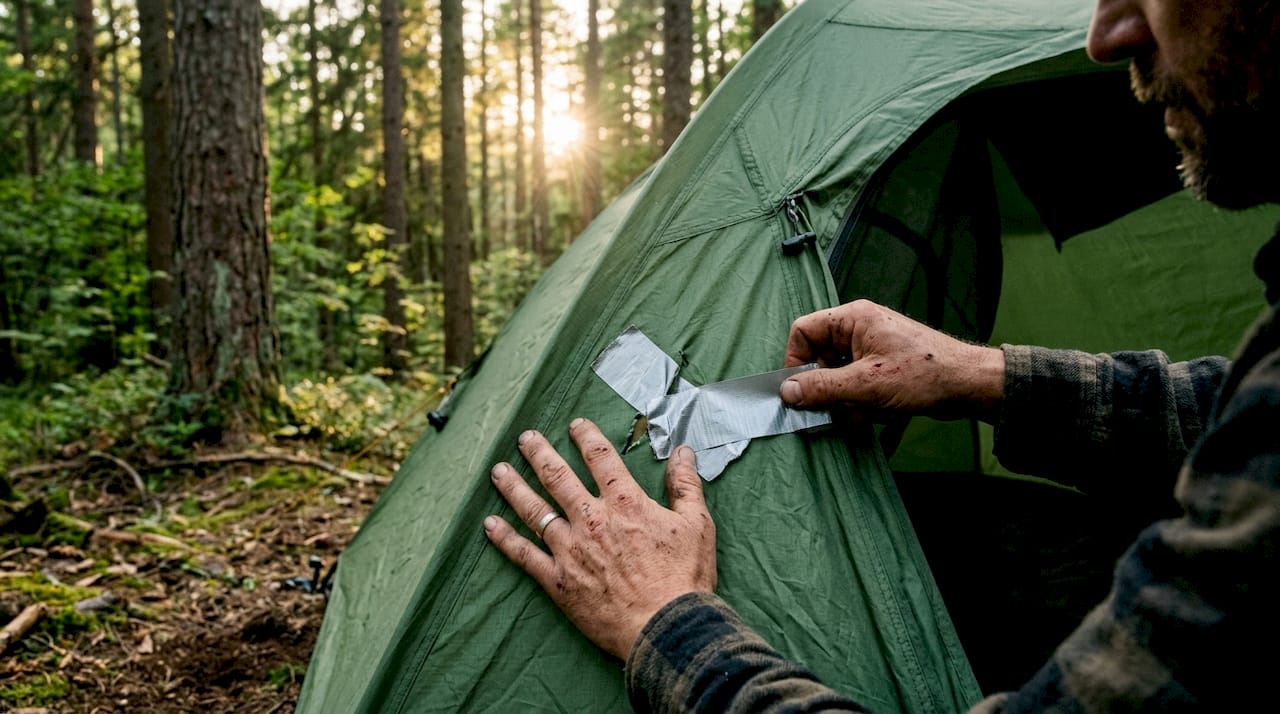
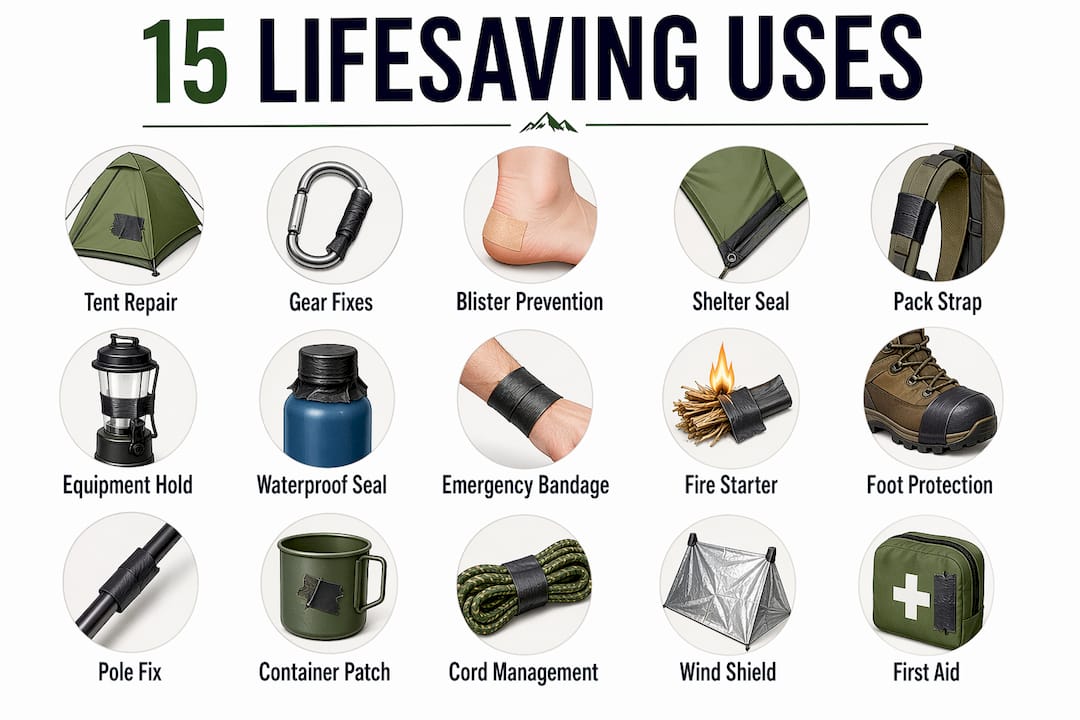
A torn tent body or a broken pole sleeve turns a dry night into a wet one fast. Duct tape patches holes in tent fabric by acting as a moisture barrier over clean, dry surfaces, blocking rain intrusion for the rest of the trip. For a snapped pole, wrap several tight layers around the break point and it will hold through a night of wind. Zipper pulls that separate from the track get a temporary fix with a small loop of tape folded back on itself.
Pack and gear fixes
Shoulder strap stitching fails on heavy loads. A few wraps of duct tape around a fraying strap buys you the miles you need to reach the trailhead. Sleeping bag baffles that tear open lose insulation fast. Tape the seam shut on the outside and the down stays put. Rain gear punctures seal the same way, keeping you dry until you can apply a permanent patch at home.
Blister prevention
This use surprises most campers. Applying duct tape over high-friction areas on your feet before hiking reduces blister formation better than bandages because it stays in place through sweat. Apply it to clean, dry skin on your heel or the ball of your foot before you start walking, not after the hot spot appears.
Pro Tip: Tear several pre-cut strips and stick them lightly to your water bottle before you leave camp. They’re ready to grab without digging through your pack.
Tarp and water container sealing
A pinhole leak in a tarp or a cracked water container becomes a real problem overnight. Duct tape seals both temporarily. Press it firmly over a dry surface, overlap the edges by at least 1.5 inches, and the seal holds long enough to matter.
Tent holes and zipper failures
Broken pole splints
Torn pack straps and sleeping bag seams
Blister prevention on feet
Tarp leaks and cracked water containers
Rain gear punctures
How to pack duct tape efficiently for the trail
Carrying a full industrial roll is the most common mistake campers make with duct tape. A full roll adds unnecessary weight and bulk, and the exposed edges collect dirt that destroys adhesion.
The right method is wrapping 2–3 meters of tape around a stubby pencil, a trekking pole shaft, or a small card. Experienced backpackers report this keeps the total weight under 0.5 ounces and protects the tape edges from contamination. That’s enough tape to handle most field repairs on a weekend trip.
Steps for packing duct tape the right way
Choose a quality tape. Premium brands like Gorilla Tape or Nashua outperform standard household tape in cold and wet conditions. Standard tape fails below 50°F and when wet. Premium tape is built for those conditions.
Measure your strip. Pull 2–3 meters off the roll. That covers most repairs without excess weight.
Wrap it tightly. Wind the tape around a trekking pole, a pencil, or a folded card. Keep wraps tight so edges don’t peel.
Store it accessibly. Put it in a hip belt pocket or the top lid of your pack. You want it in seconds, not after unpacking everything.
Pair it with your repair kit. Combine your tape with a multi-tool, a length of paracord, and a needle and thread. Together, these four items handle the vast majority of trail emergencies.
Pro Tip: Wrap a second small strip around your lighter or headlamp. You’ll always have backup tape on your person, separate from your main kit.
What are the limits of duct tape outdoors?
Duct tape is a temporary fix, not a permanent repair. Understanding where it falls short prevents frustration and keeps you safe.
Duct tape adhesive deteriorates with moisture, UV exposure, and freezing temperatures. Extended wet weather reduces edge adhesion significantly. A repair that holds on day one may peel by day three in a rainstorm. Cold temperatures stiffen the adhesive and reduce its grip on smooth surfaces.
When to use specialized repair tape instead
Duct tape works well on nylon, canvas, and most hard surfaces. It does not bond reliably to silicone-coated nylon, known as sil-nylon, which is common in ultralight tents and tarps. For sil-nylon, Tenacious Tape is the correct tool. It uses a silicone-compatible adhesive that grips where duct tape slides off.
Duct tape works well on: standard nylon, canvas, polyester, hard plastic, metal poles, leather
Duct tape fails on: sil-nylon, wet or oily surfaces, surfaces below freezing without warming the adhesive first
Use Tenacious Tape for: ultralight tent bodies, silicone-coated tarps, and any repair that must hold for multiple days in wet conditions
Surface preparation is the single biggest factor in adhesion quality. Clean the surface with a dry cloth, remove any dirt or moisture, and warm the tape adhesive against your skin for 10–15 seconds before pressing it down. Overlap the repair by at least 1.5 inches on all sides and press firmly for 30 seconds.
Duct tape buys you time in the backcountry. It is not a substitute for proper gear maintenance or permanent repairs at home. Every duct tape fix should be replaced with a proper patch or professional repair before your next trip.
How duct tape builds self-reliance in the wilderness
Carrying duct tape changes how campers think about problems. A torn pack strap stops being a trip-ending disaster and becomes a five-minute fix. That mental shift is the real value.
Wilderness survival instructors call duct tape critical damage control. It prevents minor issues from becoming catastrophic failures, buying time in the backcountry when no other help is available. That framing matters. The tape itself is simple. The confidence it builds is not.
A well-organized fix-it kit anchored by duct tape reduces analysis paralysis during gear emergencies. When you know you have the tool and you’ve practiced using it, you act faster and more clearly under stress. Practicing quick field repairs at home before a trip is one of the most underrated preparation habits in outdoor adventure.
The benefits of duct tape outdoors extend beyond the physical repair:
Reduces trip abandonment caused by fixable gear failures
Builds the “MacGyver” mindset of improvising solutions from available materials
Supports wilderness self-reliance by giving campers a reliable tool for unexpected problems
Lowers anxiety on longer or more remote trips where resupply is impossible
Pairs with other survival skills like shelter building and fire starting to create a complete preparedness system
The camper who carries duct tape and knows how to use it is fundamentally more capable than one who doesn’t. That’s not an overstatement. It’s the difference between finishing a trip and cutting it short.
Key Takeaways
Duct tape is the single highest-value item in any camping repair kit because it fixes the widest range of gear failures at the lowest weight cost.
Point | Details |
Weight vs. value | A 2–3 meter strip weighs under 0.5 ounces and handles 80% of structural gear failures on the trail. |
Pack it smart | Wrap tape around a trekking pole or pencil to save space and protect edges from dirt. |
Know its limits | Duct tape degrades in moisture, UV, and cold. Replace field repairs with permanent fixes after each trip. |
Use the right tape | Premium brands like Gorilla Tape hold in cold and wet conditions. Standard household tape does not. |
Build confidence | Practicing field repairs with duct tape reduces panic and builds self-reliance in remote situations. |
Duct tape has never let me down out there
I’ve been camping long enough to have made every packing mistake once. I’ve left the repair kit behind to save weight. I’ve brought the full industrial roll because I didn’t know better. The lesson I keep coming back to is that duct tape, packed right, is the one item I’ve never regretted carrying.
The moment that changed my thinking was a solo trip in the Cascades. My tent pole snapped at the ferrule on night two of a five-day trip. No cell signal, no ranger station nearby. I wrapped the break with eight tight layers of Gorilla Tape, reinforced it with a stick splint, and slept dry for three more nights. That repair held through two rainstorms. A permanent fix would have been better. But duct tape made the trip possible.
What I’ve noticed is that campers who doubt duct tape usually haven’t needed it yet. The first time a zipper fails at 9,000 feet or a pack strap tears at mile eight, the doubt disappears. My advice is to practice one repair at home before every season. Patch an old piece of nylon. Splint a broken stick. Get your hands familiar with how the tape behaves when it’s cold or slightly damp. That practice pays off when the real emergency happens.
The campers I respect most in the backcountry aren’t the ones with the most expensive gear. They’re the ones who can fix what breaks. Duct tape is where that skill starts.
— S
Build your camping repair kit the right way
A solid repair kit starts with duct tape and grows from there. Thrillofit covers the full picture of what belongs in your pack before any trip into the backcountry.

The camping first aid kit guide on Thrillofit walks through every item that belongs alongside your duct tape, from blister care to wound closure. For campers who want to go deeper on self-reliance, the improvised tools guide covers how duct tape fits into a broader survival skill set. Thrillofit publishes practical, field-tested advice for campers at every level, from first-time car campers to experienced backcountry travelers. Your next trip deserves a kit that’s actually ready for what the trail throws at you.
FAQ
Why carry duct tape camping instead of a repair patch kit?
Duct tape handles a wider range of repairs than any single patch kit, from tent fabric to pack straps to blister prevention. A 2–3 meter strip weighs under 0.5 ounces and addresses roughly 80% of structural gear failures on the trail.
How much duct tape should I bring camping?
Wrap 2–3 meters around a trekking pole or pencil. That amount covers most weekend trip repairs without adding meaningful weight to your pack.
Does duct tape work in rain or cold weather?
Standard household duct tape loses adhesion below 50°F and in wet conditions. Premium brands like Gorilla Tape or Nashua are built for outdoor use and maintain grip in cold and humid environments.
Can duct tape fix a tent?
Duct tape patches holes in standard nylon tent fabric by sealing out moisture over clean, dry surfaces. For ultralight tents made from sil-nylon, Tenacious Tape bonds more reliably because it uses a silicone-compatible adhesive.
How do I apply duct tape for the best hold outdoors?
Clean and dry the surface completely, warm the tape adhesive against your skin for 10–15 seconds, then press firmly with at least 1.5 inches of overlap on all sides. Hold pressure for 30 seconds to maximize adhesion.
Recommended
Comments