

The Role of Improvised Tools in Survival Situations

TL;DR:
Improvised tools serve as temporary solutions for critical survival tasks when manufactured gear fails or is unavailable. They are best used as a backup rather than a primary approach to shelter, fire, water, and food procurement. Proper mindset and understanding of material limits are essential for safe and effective improvisation in survival situations.
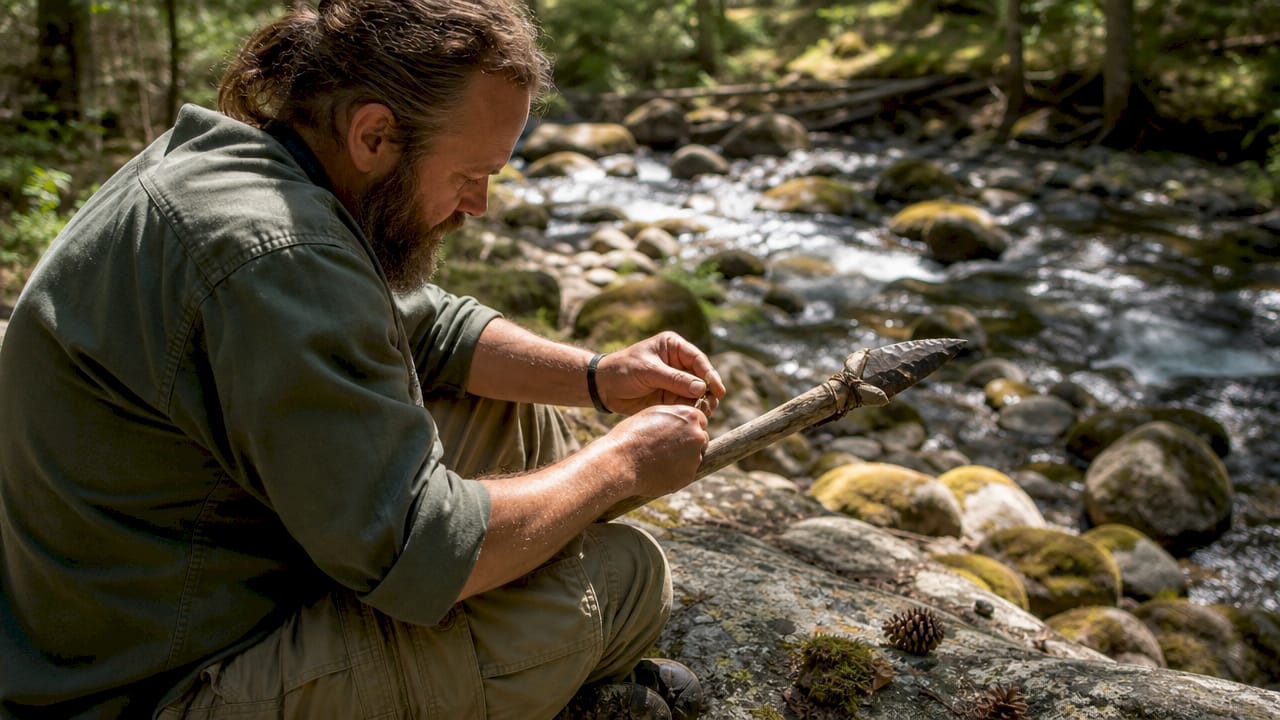
Improvised tools are defined as functional implements created from available natural or found materials when standard gear is absent, lost, or broken. The role of improvised tools in survival is to fill critical functional gaps across shelter building, fire starting, water collection, and food procurement. Improvisation fills these gaps until proper tools can be obtained, making it one of the most transferable skills any outdoor enthusiast can develop. Thrillofit covers this skill set because it sits at the intersection of preparedness and adaptability. Knowing how to fabricate a cutting edge from flint, twist plant fibers into cordage, or fold birch bark into a cooking vessel can be the difference between a manageable emergency and a fatal one.
What is the role of improvised tools in survival?
Improvised tools serve as adaptive solutions when manufactured gear fails or disappears. They are not a replacement for quality equipment. Preparedness experts recommend manufactured, multipurpose tools as the primary survival approach, reserving improvisation as a last resort when those tools fail or are insufficient. That framing matters. Treating improvisation as a backup skill rather than a primary strategy keeps your risk calculus honest.
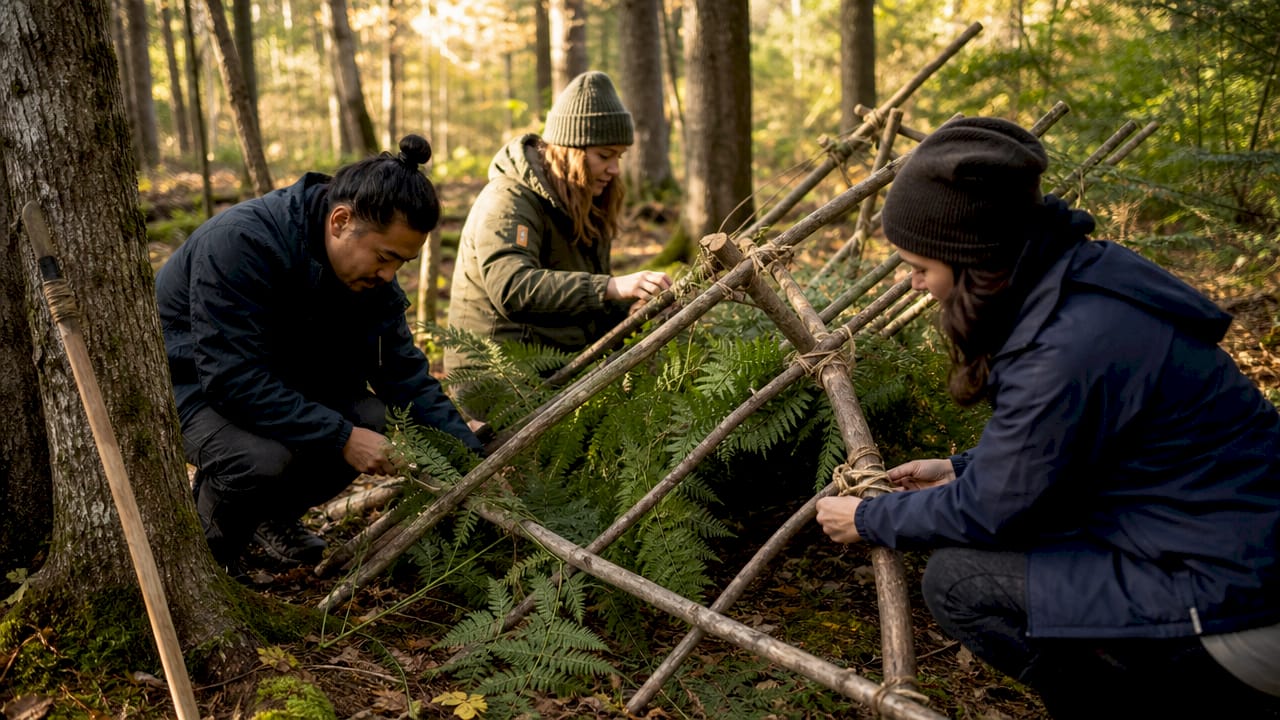
The core survival tasks that improvised tools support are shelter construction, fire starting, water procurement, and food collection. Each of these tasks has a manufactured tool equivalent that outperforms any field fabrication. A folding saw beats a stone scraper for cutting branches. A ferro rod beats a bow drill for fire starting. But when those tools are gone, knowing how to build a bow drill from scratch or lash a frame with plant cordage keeps you alive.
The broader value of survival gear improvisation is psychological. Outdoor enthusiasts who practice making tools from scratch develop a problem-solving confidence that carries into every emergency. You stop seeing a broken situation and start seeing raw materials.
What materials and techniques work best for improvised tools?
Natural and scavenged materials each have distinct strengths and limits. Knowing which to reach for first saves time and prevents dangerous failures.
Natural fibers for cordage
Dogbane and stinging nettle fibers produce cordage that breaks at 40–80 lbs per 1/4-inch diameter. That is 7 to 14 times weaker than 550 paracord, which holds 550 lbs. Use natural cordage for light lashing, snare triggers, and binding, never for load-bearing lifts or rappelling.
Twisted fabric strips from clothing or tarps outperform plant fiber in tensile strength and are faster to produce in an emergency.
Containers and cookware
Birch bark, when properly harvested and folded, creates a waterproof cooking vessel in under 30 minutes. A skilled maker can have water boiling in that same vessel shortly after. Clay-coated woven baskets serve a similar function but require drying time.
Green bamboo sections work as both water carriers and cooking tubes. They are single-use over direct flame but functional for one boiling cycle.
Cutting and structural tools from metal scrap
Cold-working scrap metal by bending and cutting is the safest fabrication method for beginners. Heating high-carbon steel past the blue color threshold, roughly 600°F, destroys its temper and reduces hardness permanently. Cold-working avoids that risk entirely.
Fire hardening wooden implements, such as digging sticks and spear tips, adds surface durability without requiring metal at all.
Pro Tip: Select materials that serve multiple functions. A straight hardwood branch can become a digging stick, a fire bow, a shelter pole, or a weapon handle. Prioritize materials you can repair or replace quickly from the same environment.
How do you use improvised tools for shelter, fire, water, and food?
Applying DIY survival tools across the four core survival needs requires a clear sequence and realistic expectations about what each tool can handle.
Shelter construction. Use a long, straight branch as a ridgepole and lash crossbeams with twisted plant cordage or fabric strips. A stone or dense hardwood knot works as a makeshift hammer for driving stakes. Building a solid shelter from natural materials is achievable, but improvised lashings loosen faster than rope and need checking every few hours.
Fire starting. The bow drill is the most reliable improvised fire-starting method when no manufactured ignition source exists. You need a dry softwood fireboard, a straight hardwood spindle, a flat stone or shell for the handhold, and a flexible green branch for the bow. Flint or quartzite struck against high-carbon steel scrap also produces sparks. A convex lens from eyeglasses or a water-filled clear bag can focus sunlight onto tinder in direct sun.
Water collection and boiling. A birch bark vessel handles boiling water safely for short-term use. Clay-lined baskets work for stone boiling, where you heat rocks in a fire and drop them into the water container. Improvised containers made from folded leaves or bark are adequate for short-distance transport but leak over time.
Food procurement. Bend a small metal scrap, a safety pin, or a wire staple into a fishing hook. Sharpen a hardwood branch into a fish spear using a stone edge. Build a simple deadfall trap from three sticks and a flat rock for small game. Snares made from twisted plant cordage or stripped wire work for rabbits and squirrels on well-used trails.
First aid support. Straight sticks padded with clothing make functional splints for fracture immobilization. Twisted fabric strips serve as bandage ties. These are short-term solutions only. Knowing your camping first aid kit essentials and carrying them remains the better option.
What are the real limits and risks of improvised survival tools?
Improvised tools carry genuine risks that outdoor enthusiasts must understand before relying on them. Improvised tools are adequate for cutting once, short-term water transport, light lashing, monitored lifting, and brief injury immobilization. They are not adequate for sustained load-bearing, repeated cutting cycles, or life-safety structural roles.
Key risk areas to know:
Cordage failure. Natural fiber cordage at 40–80 lbs breaking strength fails without warning under dynamic loads. Never use it to lower a person, secure a load above a sleeping area, or anchor a climbing system.
Improvised splints. Splints are only safe for injury transport under 12 hours. Beyond that threshold, structural integrity degrades and complex fractures risk further displacement. Get to medical care within that window.
Makeshift cutting edges. Stone flakes and improvised metal edges chip and fracture unpredictably. They give no warning before failure. Always cut away from your body and keep grip pressure light.
Improvised electrical or structural elements. Makeshift wiring, load-bearing frames, and improvised anchors carry catastrophic failure risk. These are areas where manufactured tools are indispensable and improvisation is strictly a last resort.
Overheated metal tools. Heating scrap steel past the blue color threshold destroys its temper. A blade that looks intact may snap under the first real cutting load.
Recognizing these limits prevents catastrophic failure in life-safety roles. The goal is not to avoid improvisation but to use it with clear eyes about what it can and cannot hold.
What mindset makes improvised tools actually work?
The most critical survival skill is not physical tool-making. It is the ability to see function rather than original design. Survival instructors call the barrier to this skill “functional fixedness,” the tendency to see objects only as what they were made to be. A shoelace is not just a shoelace. It is cordage, a tourniquet, a snare trigger, and a bow string.
Overcoming functional fixedness is the core cognitive shift that separates survivors from victims in resource-scarce situations. Practice it before you need it. Pick up objects at home and list five survival uses for each one.
First-principles thinking takes this further. Instead of asking “what tool do I need?”, ask “what does this task fundamentally require?” Cutting a branch requires a hard edge moving across softer material. That requirement can be met by flint, a broken bottle, a sharpened bone, or a metal scrap. First-principles thinking focuses on fundamental needs rather than specific device replacements, enabling simpler and more repairable solutions.
Brazilian engineers call this approach gambiarra, building functional solutions from locally available components under tight constraints. Gambiarra engineering produces systems that are easier to maintain and repair than theoretically ideal solutions because every component is familiar and locally sourced. That principle applies directly to wilderness improvisation.
“The best survival tool is the one you can make right now from what you have. Not the one you wish you had brought.”
Pro Tip: After every outdoor trip, spend 10 minutes reviewing what you improvised or could have improvised. That reflection builds a mental library of solutions faster than any book.
Key Takeaways
Improvised tools are temporary, task-specific solutions that extend survival capability when manufactured gear is unavailable, but they carry real limits that require clear-eyed risk management.
Point | Details |
Improvisation fills functional gaps | Use makeshift tools to cover critical tasks until proper gear is available or accessible. |
Natural cordage has strict load limits | Dogbane and nettle cordage breaks at 40–80 lbs, making it unsuitable for load-bearing or life-safety roles. |
Splints have a 12-hour safety window | Improvised splints are only reliable for injury transport under 12 hours before structural integrity fails. |
Mindset drives improvisation success | Overcoming functional fixedness and applying first-principles thinking produces better field solutions than memorizing techniques. |
Preparedness and improvisation work together | Manufactured multipurpose tools remain the primary approach; improvisation is a critical backup, not a replacement. |
Why I think most people practice improvisation backwards
Most outdoor enthusiasts learn improvisation by memorizing techniques: how to make a bow drill, how to fold birch bark, how to tie a lashing. That knowledge matters. But technique without mindset training fails under real stress. When you are cold, hungry, and scared, you do not remember step-by-step instructions. You fall back on pattern recognition.
The people I have seen handle improvised tool situations best are not the ones who memorized the most techniques. They are the ones who practiced thinking under constraints. They spent time deliberately using the wrong tool for a job, figuring out what actually mattered about the task, and building mental flexibility. That is a trainable skill, and it transfers to every survival scenario.
My honest advice: carry quality manufactured gear as your first line. A good fixed-blade knife, a ferro rod, and 50 feet of paracord cover more scenarios than any improvised equivalent. But practice improvisation regularly, not as a replacement for that gear, but as a way to understand what each tool actually does at a fundamental level. When your knife breaks or your pack goes into a river, that understanding is what saves you. Thrillofit covers both sides of this equation because neither side alone is enough. Check out the survival gear guide for a grounded look at what manufactured tools are worth carrying before you ever need to improvise.
— S
Build your survival skills with Thrillofit
Improvised tool knowledge is one layer of a complete outdoor preparedness approach. Thrillofit’s survival content covers the full picture, from fire-starting fundamentals to wilderness first aid, so you build skills that compound over time.

Whether you are new to bushcraft or deepening an existing skill set, the Thrillofit survival blog gives you practical, tested guidance across every core outdoor scenario. The goal is a layered approach: quality manufactured gear as your foundation, improvisation skills as your backup, and the mindset to use both effectively when it counts. Start with the guides that match your current skill level and build from there.
FAQ
What is the role of improvised tools in survival?
Improvised tools fill critical functional gaps when manufactured gear is unavailable, broken, or lost. They support core survival tasks including shelter building, fire starting, water collection, and food procurement on a temporary basis.
How strong is natural cordage compared to paracord?
Natural cordage from dogbane or stinging nettle breaks at 40–80 lbs per 1/4-inch diameter. Standard 550 paracord holds 550 lbs, making natural cordage 7 to 14 times weaker.
How long can an improvised splint safely be used?
Improvised splints are safe for injury transport under 12 hours. Beyond that, structural integrity is insufficient for complex fractures and medical care becomes urgent.
What is the best mindset for improvising survival tools?
First-principles thinking produces the best results. Define what a task fundamentally requires, then identify locally available materials that meet those requirements, rather than trying to replicate a specific manufactured tool.
When should you not rely on improvised tools?
Avoid improvised tools in load-bearing, life-safety, or structural roles where failure is catastrophic. Manufactured tools are indispensable for sustained cutting, climbing anchors, and medical applications beyond short-term stabilization.
Recommended
Comments