

Wildlife Encounter Guidelines for Hikers and Outdoorspeople

TL;DR:
Keeping wildlife at a safe distance, staying calm, and reporting aggressive animals are essential for safety and conservation. Properly storing food, making noise, and traveling predictably help prevent dangerous encounters while species-specific responses must be applied carefully. Following these guidelines ensures legal, ethical, and safe interactions in U.S. public lands.
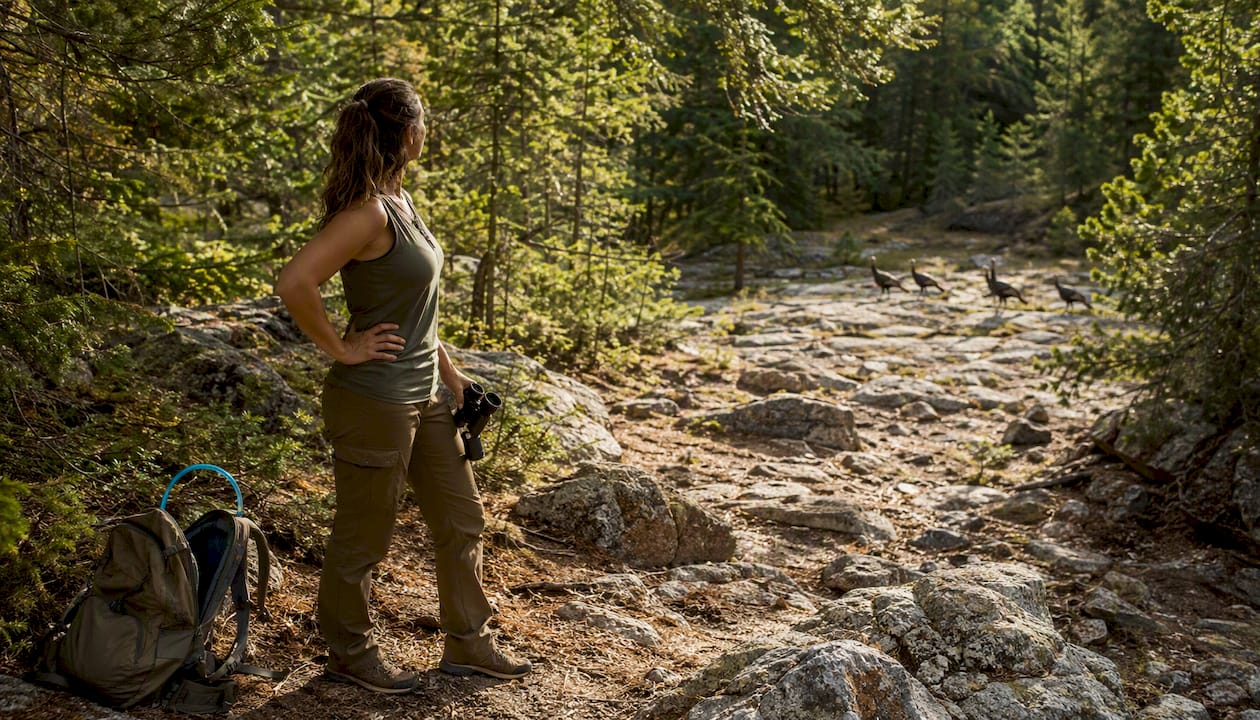
Give wildlife space. The moment you spot an animal, stop moving, stay calm, and back away slowly. That single rule, backed by the National Park Service, the U.S. Fish and Wildlife Service (USFWS), and the Leave No Trace Center for Outdoor Ethics, covers most situations you’ll face on the trail.
Here’s the field checklist to memorize before your next hike:
Give space. Stay at least 25 yards from most wildlife, 100 yards from bears and wolves.
No feeding. Feeding wildlife is illegal in national parks and leads directly to habituation.
Retreat calmly. Back away slowly and never run.
Report problems. Habituated or aggressive animals should be reported to a park ranger or state wildlife agency immediately.
These four points cover the legal baseline, the ethical standard, and your personal safety. Everything below builds on them with species-specific steps, campsite protocols, and the reporting workflow you need when something goes wrong. Thrillofit has compiled this guide from primary agency sources so you can pull it up on the trail and act.
Table of Contents
What are the core wildlife encounter guidelines on U.S. public lands?
How do you avoid a surprise wildlife encounter on the trail?
How should you store food and manage your campsite to prevent habituation?
What are your legal obligations, and what should you report?
What should you prepare before heading into wildlife country?
What are the core wildlife encounter guidelines on U.S. public lands?
The rules for responsible wildlife viewing come down to distance, behavior, and restraint. Follow these on any U.S. public land and you stay legal, ethical, and safe.
Do these:
Keep at least 25 yards from most wildlife and 100 yards from bears and wolves. The NPS 100/25 rule is a baseline, not a guarantee. If the animal changes its behavior, you’re already too close.
Use binoculars, a spotting scope, or a telephoto lens. Optics close the distance without closing the gap.
Stay on marked trails. Ground-nesting birds, reptiles, and small mammals are easily crushed or flushed by off-trail movement.
Keep pets leashed at all times. An unleashed dog can trigger a defensive charge from deer, elk, or even a nesting bird.
Store food in bear-proof containers or lockers. Scented items, including toiletries, count as food.
Pull fully into designated pullouts when viewing wildlife from a vehicle. Vehicle strikes are among the leading causes of wildlife mortality in national parks.
Never do these:
Feed or bait any wild animal. This is illegal in national parks under federal regulation and prohibited on most other public lands. An animal that associates humans with food often ends up trapped, relocated, or euthanized.
Touch, pick up, or attempt to move wildlife, including young animals that appear abandoned.
Block an animal’s escape route or position yourself between a mother and her young.
Attempt a selfie by approaching the animal. Every year, visitors are injured doing exactly this with bison, elk, and bears.
Legal callout: Feeding or intentionally disturbing wildlife is illegal in U.S. national parks and on many other public lands. Violations can result in fines and removal from the park.
For photography, the ethical compass is three questions: Is the animal showing stress? Are you blocking its escape or access to food or water? Would your caption accurately represent how the shot was taken? If any answer is uncomfortable, back away. The best close-ups happen when an animal approaches on its own terms.
Pro Tip: Use the thumb rule. Extend your arm, hold up your thumb, and line it up with the animal. If your thumb doesn’t cover the animal, you’re too close. Back up until it does. If the animal still seems agitated, keep going.
How do you avoid a surprise wildlife encounter on the trail?
Most dangerous encounters happen because the animal was startled. Prevention is straightforward: make noise, travel predictably, and avoid the times and conditions when predators are most active.
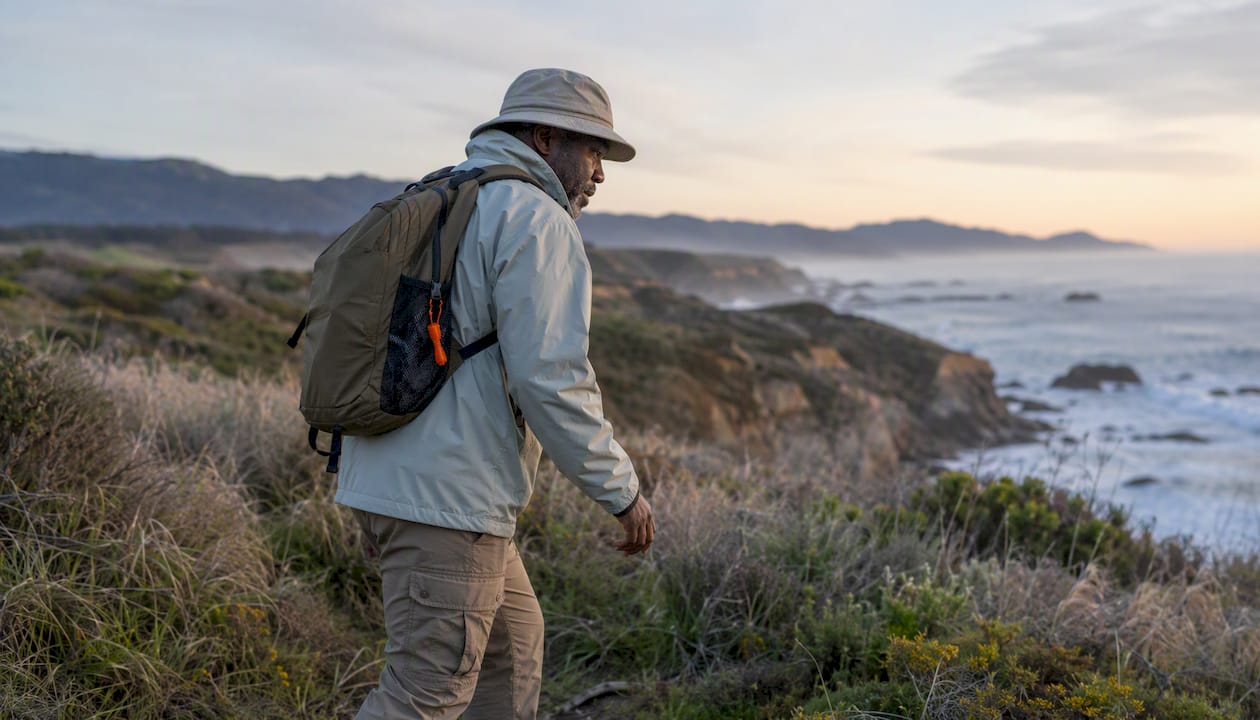
Make noise consistently in low-visibility terrain, dense brush, near streams, and on windy days when animals can’t hear you coming. Talk loudly, clap, or strike your trekking poles together. Hikers should make noise in areas where visibility is limited and avoid dawn, dusk, and nighttime travel in predator country, when large carnivores are most active.
Silence has its place, though. If you’re birding or watching non-predatory species, quiet movement reduces disturbance. The key is knowing which mode fits the habitat.
Group behavior matters. Stay together. A group of four or more people is significantly less likely to have a dangerous encounter with a large predator than a solo hiker. Keep children between adults, not ahead of the group. If you have a dog, keep it on a short leash and close to your body when you’re in bear or mountain lion country.
Before you leave camp or start a hike, run through this safety check:
Map reviewed and downloaded offline
Bear spray clipped to hip belt, safety off practiced
Phone charged
Local species and seasonal activity noted (check the park’s website or visitor center)
Food and scented items secured
Pro Tip: Tell someone your route and expected return time before every hike. If something goes wrong and you can’t call out, that information gets search and rescue moving faster.
Species-specific responses: what to do right now
Not every animal needs the same reaction. Here’s the short version for the species you’re most likely to encounter in the U.S., followed by a reference table.
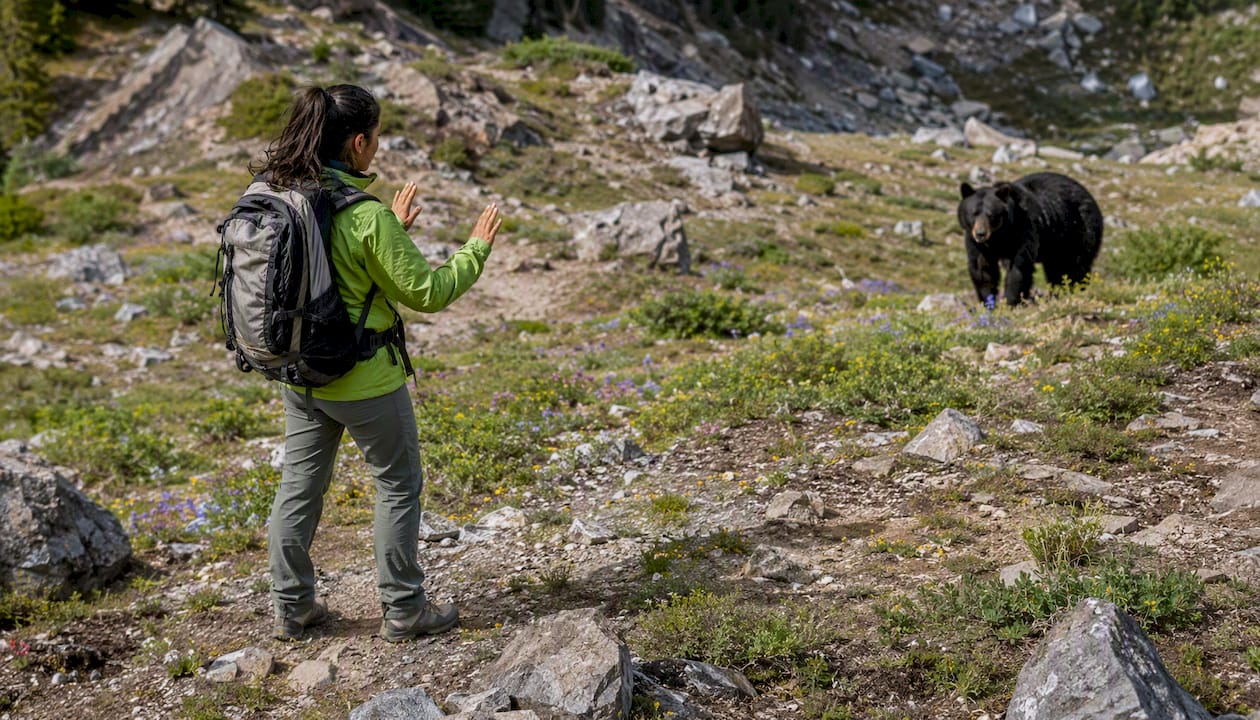
Bears: Stay calm. Speak in a low, steady voice. Back away slowly without turning your back. If a bear charges, deploy bear spray when it’s within 60 feet. Never run. A black bear that makes contact: fight back. A grizzly making contact in a surprise encounter: play dead (face down, hands protecting your neck). A grizzly that stalks you or attacks at night: fight back.
Mountain lions: Do not run. Running triggers a chase response. Face the animal, make yourself appear large (open your jacket, raise your arms), maintain eye contact, and back away slowly. If it attacks, fight back aggressively. Aim for the eyes and nose.
Bison and elk: Give them far more space than they appear to need. Bison can sprint at 35 mph and are responsible for more injuries in Yellowstone than any other animal. Stay 25 yards minimum, and if one turns to face you with its head lowered, move behind a solid barrier immediately.
Moose: Moose are unpredictable and will charge without much warning. A moose with its ears laid back and hackles raised is about to charge. Get behind a large tree or solid object. Unlike bears, moose typically stop once you’re out of their immediate space.
Snakes: Stop. Identify the direction. Walk slowly around it, giving at least 6 feet of clearance. Never poke, grab, or try to move a snake. Most bites happen when people attempt to handle or kill them. If bitten, keep the bite below heart level, stay calm, and get to an emergency room. Read Thrillofit’s snakebite survival guide for full first-aid steps.
Alligators: Stay at least 60 feet from any alligator near water. Never feed them. If attacked, fight back aggressively — target the eyes and snout. Unlike bears, playing dead is the wrong move with an alligator.
Deer and common herbivores: Admire from a distance. A doe with fawns or a buck in rut can be aggressive. Give them space and don’t approach.
Species | Minimum Distance | Immediate Action |
Bears (black/grizzly) | 100 yards | Back away slowly; deploy bear spray if it charges |
Wolves | 100 yards | Back away; do not run |
Mountain lions | 100 yards | Face it, appear large, back away; fight if attacked |
Bison / elk / moose | 25 yards (minimum) | Move behind solid cover; do not run |
Snakes | 6 feet | Stop, identify, walk slowly around |
Alligators | 60 feet | Back away; fight back if attacked |
Deer / other herbivores | 25 yards | Observe quietly; give space to mothers with young |
Pro Tip: Distinguishing a bluff charge from a predatory charge matters with bears. A bluff charge usually stops short and the bear veers off. A predatory approach is quiet and direct. Bear spray works for both — deploy it at 60 feet regardless.
How should you store food and manage your campsite to prevent habituation?
Proper food storage is the single most effective way to keep wildlife wild. An animal that finds food near humans once will return. Repeat it enough times and that animal becomes habituated, loses its fear of people, and eventually has to be removed or euthanized. As the NPS puts it: a fed bear is a dead bear.
Follow this routine at every campsite:
Cook and eat at least 200 feet from your sleeping area. Odors cling to the ground and vegetation. Distance matters.
Clean up immediately after eating. Wash dishes, pack out food scraps, and wipe down cooking surfaces.
Store all food, trash, and scented items (toothpaste, sunscreen, lip balm, trash) in a certified bear canister, a park-provided food locker, or a properly hung bear bag. Never store food in your tent.
Pack out all trash. Do not bury it or leave it in a fire ring.
Secure your vehicle. In areas with habituated bears, food left in a car can result in a broken window and a bear that now associates cars with meals.
The gear options: a certified bear canister (required in many backcountry areas), a bear bag hung using the PCT method or a bear hang kit, or a hard-sided food locker at a designated campsite. Check the specific park’s requirements before you go. Some areas mandate canisters; others allow hang methods.
Pro Tip: Run the 30-minute rule: cook, clean, and secure all food within 30 minutes of finishing your meal. The longer food smells linger, the farther they carry.
What are your legal obligations, and what should you report?
Feeding or harassing wildlife is illegal in U.S. national parks under federal law, and similar prohibitions apply on most Bureau of Land Management and U.S. Forest Service lands. The NPS explicitly prohibits feeding, touching, teasing, frightening, or intentionally disturbing wildlife. Violations carry fines and can result in park removal.
“Harassing certain species can be a crime. Capture or witness the natural behaviors of wildlife without harassing them by throwing objects, making noises, or forcing them to flee.” — Washington Department of Fish & Wildlife
What to report:
Any animal that approaches people or campsites without provocation (habituation sign)
Aggressive behavior toward humans or pets
Injured, sick, or orphaned animals
Any incident involving physical contact between a person and a wild animal
How to report:
Move to a safe distance first.
Note the location (GPS coordinates or trail name and mile marker), time, species, and behavior.
Take photos if you can do so safely.
Contact the nearest park ranger station, visitor center, or state wildlife agency non-emergency line.
Rules vary by jurisdiction. A behavior that triggers a mandatory report in one national park may be handled differently by a state agency in the same region. Always check the specific park’s website or ask at the visitor center before your trip.
This article is general information, not legal advice. Confirm current rules with the relevant park or state wildlife agency for your specific location.
What should you prepare before heading into wildlife country?
The gear you carry and the research you do before leaving the trailhead determines how well you handle an encounter. Preparation is not optional in bear or mountain lion country.
Numbered pre-trip checklist (screenshot this):
Bear spray — full canister, clipped to hip belt, safety practiced
First-aid kit with camping essentials including wound care and an emergency whistle
Offline map downloaded (AllTrails, Gaia GPS, or the NPS app)
Phone charged to 100%
Binoculars or a camera with telephoto lens
Bear canister or food storage solution appropriate for the area
Local wildlife advisory checked (park website or visitor center)
Seasonal closures and trail conditions reviewed
Trip plan left with a contact at home
Before you go, research these specifically:
Which large predators are active in the area and at what time of year
Whether bear spray is recommended or required
Food storage requirements (canister vs. hang vs. locker)
Any recent wildlife incident reports or trail closures
For physical conditioning and injury prevention habits that keep you moving efficiently on the trail, it’s worth reviewing training resources built for active outdoorspeople. A hiker who moves confidently and quietly is less likely to startle an animal than one who is fatigued and stumbling.
Practice deploying your bear spray before the trip. Pull it from the holster, thumb the safety off, and simulate a spray. Thirty seconds of practice at home is worth far more than fumbling with it at 60 feet from a charging bear.
What do most hikers get wrong about wildlife encounters?
The biggest mistake is treating all encounters the same. Species and context determine the correct response, and the wrong reaction can escalate a neutral situation into a dangerous one.
Common misconceptions:
“Play dead for every bear.” Wrong. Play dead only for a grizzly making surprise contact. Fight back against a black bear attack and against any bear that stalks you.
“Run if you’re scared.” Running triggers predatory instincts in mountain lions and can provoke a chase from bears. Walk backward, face the animal.
“Fight an alligator.” This one is actually correct, and it surprises people. Unlike bears, alligators respond to aggressive counterattacks. Target the eyes and snout.
“If it’s not charging, I’m fine.” Stress signals often appear well before aggression. Watch for fixed stares, laid-back ears, or an animal that stops feeding and orients toward you. Those are warnings. Back away before the situation escalates.
“Stress signals include fixed stares, laid-back ears, or abandoned feeding/grooming — limit observation time to 30 minutes or less to reduce stress accumulation.” — NOAA Sanctuaries Wildlife Viewing Guidelines
Limiting your observation time to roughly 30 minutes also reduces cumulative stress on the animal, even when it appears calm. This matters most for nesting birds, nursing mothers, and animals in winter-stressed condition.
The Leave No Trace principle of respecting wildlife frames this well: treating guidelines as stewardship, not just self-protection, reduces long-term harm to populations by preventing habituation and energy-wasting stress responses. You’re not just protecting yourself. You’re protecting the animal’s ability to survive the next encounter with the next hiker.
Key Takeaways
Responsible wildlife encounters require distance, restraint, and species-specific knowledge — not just good intentions.
Point | Details |
Distance is the foundation | Stay 100 yards from bears and wolves, 25 yards from most other wildlife; back up if the animal reacts. |
Never feed wildlife | Feeding is illegal in national parks and causes habituation that often ends in the animal’s removal or death. |
Species responses differ | Fight an alligator, back away from a cougar, deploy bear spray for bears — one reaction does not fit all. |
Food storage prevents incidents | Use certified bear canisters or lockers and cook 200 feet from your sleeping area on every trip. |
Report habituated animals | Contact a park ranger or state wildlife agency with location, behavior, and photos after any concerning encounter. |
Why these rules actually matter in the field
Most hikers read wildlife guidelines the way they read the terms of service on an app: quickly, and with the assumption that nothing bad will actually happen to them. That assumption is what gets people hurt.
The rules above are not bureaucratic caution. They reflect how animals actually behave under stress, and what happens to populations when humans repeatedly ignore the boundaries. A habituated bear doesn’t just become dangerous to the next hiker. It gets killed. The feeding prohibition isn’t about protecting you from a cute raccoon. It’s about keeping that raccoon alive.
What I find most underappreciated in the standard guidance is the stress-signal piece. Most people wait for an animal to charge before they back away. By that point, the animal has already been pushed past its threshold. The fixed stare, the stopped feeding, the slow turn toward you — those are the real signals, and they come minutes before anything dramatic happens. Backing away at that point costs you nothing and preserves the encounter for the next person on the trail.
The stewardship mindset that Leave No Trace advocates for is the right frame. You’re a guest in the animal’s home. Act accordingly, and the encounters you do have will be the kind worth remembering.
For more guides on outdoor adventure and wilderness safety, Thrillofit covers everything from bear encounters to trail first aid.
Authoritative sources and where to learn more
National Park Service — Watching Wildlife: The primary source for distance rules, food storage requirements, and the legal prohibition on feeding. Check your specific park’s page for local minimums.
U.S. Fish and Wildlife Service — Wildlife Safety Tips: Species-specific guidance including the alligator and big-cat exceptions; covers disease risk and pet safety.
Leave No Trace Center for Outdoor Ethics: The stewardship framework behind the “Respect Wildlife” principle; useful for photography ethics and minimizing disturbance.
NOAA Sanctuaries — Wildlife Viewing Guidelines: Covers stress signals, observation time limits, and marine wildlife rules.
CDC — Wildlife Health & Safety: Disease transmission risks, pet safety around wildlife, and post-bite medical guidance.
NPS Alaska — Wildlife Safety: Detailed food storage protocols and bear safety for backcountry travel.
State wildlife agencies: Search “[your state] department of fish and wildlife” for local reporting contacts, species-specific advisories, and area closures. Rules vary significantly by state and land type.
Thrillofit: The Thrillofit blog covers related guides on bear encounters, snakebite first aid, trail preparation, and gear picks for outdoor safety.
Recommended
Comments