
Edible Wild Food: A Beginner's Guide to Foraging Safely

TL;DR:
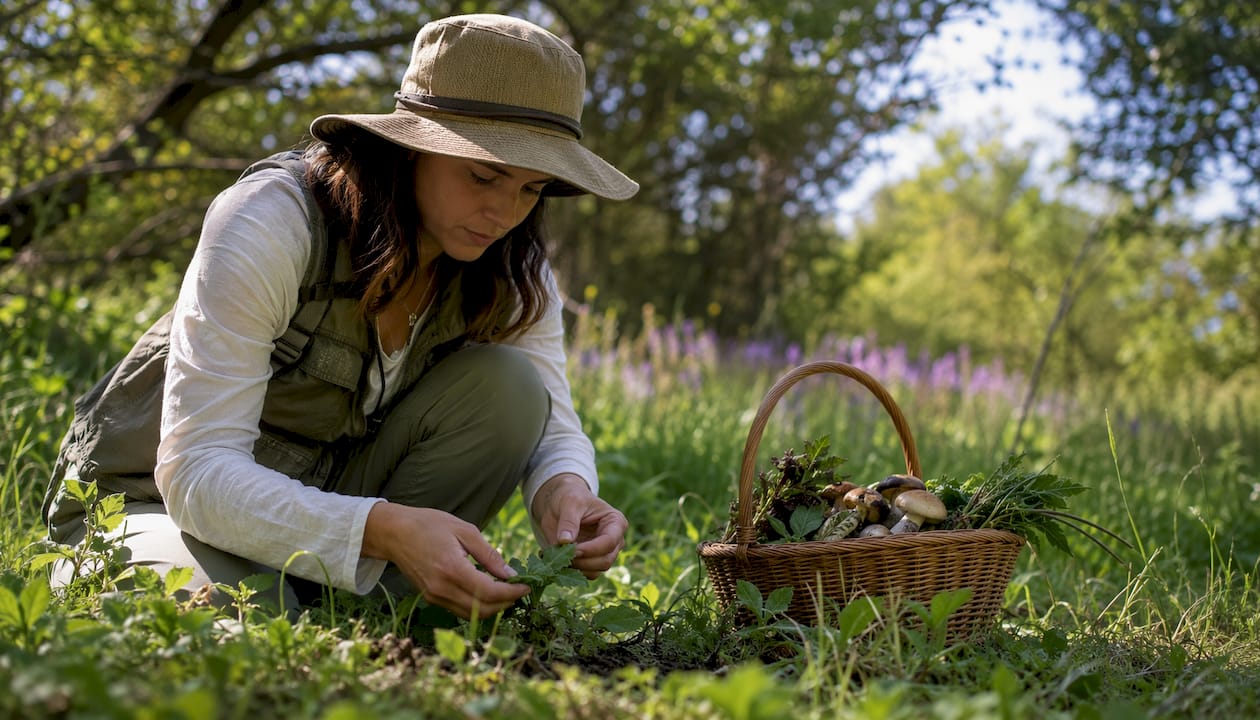
Edible wild foods include plants, fungi, nuts, berries, and aquatic organisms, which humans can safely consume if properly identified.
Proper identification, knowledge of edible parts, and awareness of contamination and legal issues are essential for safe foraging.
Edible wild food is any plant, fungus, nut, berry, aquatic plant, or other organism found in nature that humans can safely eat. The single most important rule: never eat anything unless you can positively identify it 100%, know which part is edible, and know at what growth stage it is safe. Resources like the Peterson Field Guide to Edible Wild Plants, the USDA PLANTS Database, and Thrillofit’s own outdoor guides are solid starting points. If you are unsure, skip ahead to the identification and contamination sections before you pick a single leaf.
Table of Contents
What counts as edible wild food?
Wild edibles fall into several broad groups. Knowing the categories helps you focus your learning and avoid accidentally treating an ornamental or toxic lookalike as fair game.
Wild leafy greens and weeds: Dandelion, chickweed, stinging nettle, plantain, purslane, lamb’s quarters. Most are widespread across the U.S.
Edible flowers: Violet blossoms, clover flowers, elderflower (raw elder berries are another matter entirely).
Nuts and seeds: Acorns, hickory nuts, black walnuts, pine nuts.
Fruits and berries: Blackberries, raspberries, wild strawberries, serviceberries.
Fungi (mushrooms): Chanterelles, chicken of the woods, morels. Highest risk category — see the mushroom section.
Aquatic plants: Cattail (multiple edible parts), watercress, arrowhead tubers.
Edible roots and tubers: Wild garlic bulbs, burdock root, Jerusalem artichoke.
Edible insects and small game: Crickets, grasshoppers, crayfish. Less common in casual foraging but relevant in survival contexts.
One detail beginners often miss: the same plant can have edible and toxic parts simultaneously. Young nettle leaves are safe to cook; mature nettle seeds are a different story. Cattail offers edible pollen, young shoots, and roots, but the preparation method differs for each. Always verify the part and stage before eating.
Why forage? Benefits, and the risks you need to take seriously
Foraging is having a genuine revival in the U.S., driven by food costs, interest in self-reliance, and a growing awareness of what industrialized food systems leave out. The reasons people do it are real.
Benefits:
Nutrition: Wild edible plants often carry higher levels of antioxidants, phenolics, fiber, and minerals than many cultivated commercial varieties. Some species can cover significant portions of daily mineral and vitamin needs in a single serving.
Flavor variety: Ramps, wood sorrel, and purslane bring flavors you simply cannot buy at a grocery store.
Low cost: Once you know what to look for, the food is free.
Cultural heritage: Foraging knowledge was historically essential across every human culture. Extension materials note that urbanization is rapidly eroding this ancestral knowledge, and many communities are actively working to reclaim it.
Resilience and survival value: Knowing local wild foods is a genuine survival skill, not just a hobby.
Risks:
Misidentification: The leading cause of wild food poisoning. One wrong ID can be fatal.
Contamination: Roadside plants absorb vehicle exhaust and pesticide drift. Industrial sites carry heavy metals. Fields recently sprayed are off-limits.
Legal issues: Harvesting on private land without permission or in protected parks can carry fines.
Allergies: Even confirmed-safe species can trigger reactions in some people.
Overharvesting: Stripping a patch bare damages the local ecosystem and eliminates future harvests.
Pro Tip: When trying any new wild food for the first time, eat a small amount and wait 24 hours before eating more. Even correctly identified, safe species occasionally cause reactions in individuals with specific sensitivities.
How to identify edible wild plants and mushrooms safely
The core rule is simple and non-negotiable: if there is any doubt, do not eat it. Guides consistently stress that even 1% uncertainty is enough reason to put the plant down.
Field identification checklist
Photograph the whole plant — leaves, stem, flowers, fruit, and root if accessible.
Note the habitat — woodland edge, meadow, wetland, disturbed ground.
Record the season — many plants look identical at different growth stages.
Check leaf shape, arrangement, and texture — alternate vs. opposite, smooth vs. hairy.
Smell carefully — but never taste to identify.
Cross-reference at least two printed field guides and one digital source.
Consult a mentor or post to a verified community (iNaturalist works well for this).
Confirm the specific part and stage are edible before consuming anything.
Lookalike dangers: patterns to know
Edible species | Dangerous lookalike | Key distinguishing feature |
Wild onion / garlic | Death camas (Anticlea elegans) | Wild onion smells strongly of onion/garlic; death camas has no onion odor |
Wild carrot (Queen Anne’s lace) | Poison hemlock, water hemlock | Wild carrot has a hairy stem and a single purple floret at center; hemlocks have smooth, purple-blotched stems |
Elderberry | Pokeweed (young shoots) | Elderberry has opposite compound leaves; pokeweed has simple alternate leaves and a distinctive magenta stem at maturity |
Chanterelle mushroom | Jack-o’-lantern mushroom | Chanterelles have forked false gills; jack-o’-lanterns have true, sharp gills |
Recommended tools
The Peterson Field Guide to Edible Wild Plants (Eastern/Central or Western edition) remains the most trusted printed reference for U.S. foragers. Carrying a region-specific field guide and never relying on a single identification method is the standard recommendation from experienced foragers. The USDA PLANTS Database gives authoritative botanical data and range maps. iNaturalist lets you photograph a find and get community verification, though it should supplement, not replace, a field guide.
Warning: Mushroom identification from a single feature — color, shape, or smell alone — is how poisonings happen. Spore print color, gill attachment, stem ring presence, and habitat must all align before you consider eating any fungus.
Pro Tip: Apps like iNaturalist are useful for logging and community feedback, but treat any app-generated ID as a starting hypothesis, not a verdict. Always confirm with a printed guide or a knowledgeable person.
Common beginner-friendly wild edibles in the U.S.
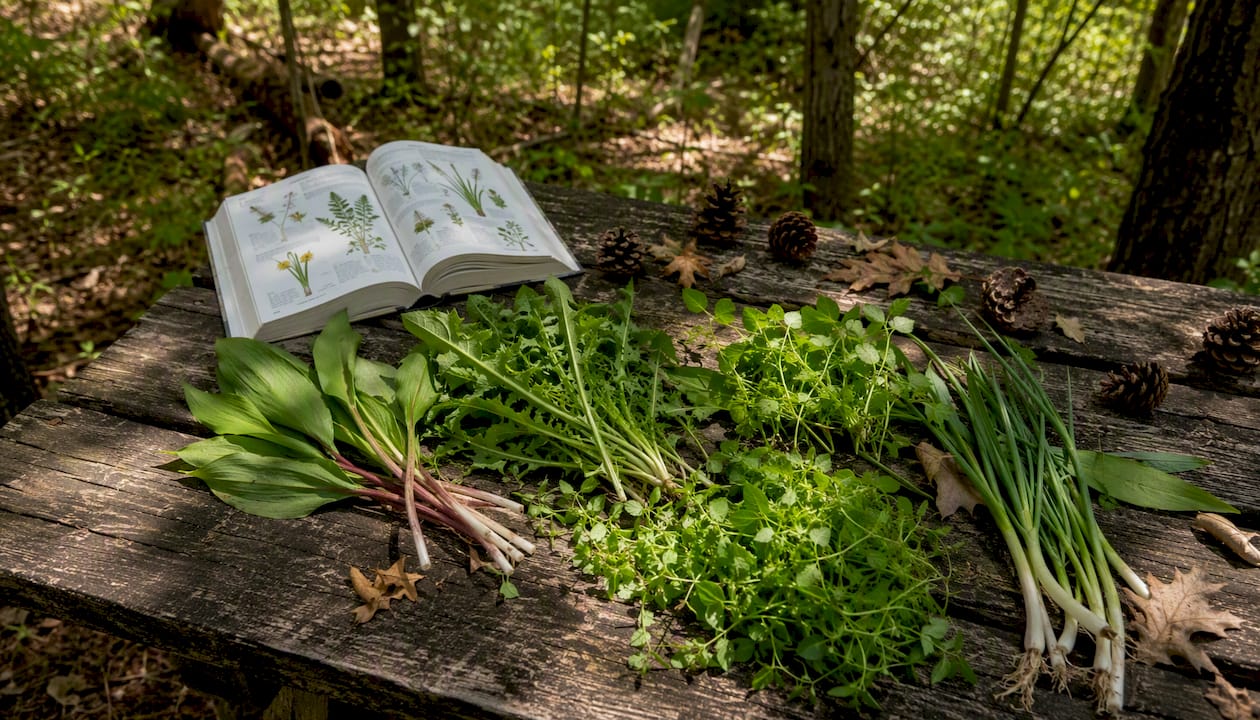
Start with species that are abundant, have few dangerous lookalikes, and are useful in the kitchen. Extension guidance recommends building a short foundational species list before branching out.
Species | Edible part | Best season | Quick use |
Dandelion | Leaves, flowers, root | Spring (leaves), fall (root) | Raw salad, sautéed greens, root tea |
Chickweed | Young stems and leaves | Early spring, fall | Raw in salads, lightly cooked |
Wild garlic / onion | Bulb, leaves, flowers | Spring | Cooked like scallions, pesto, soups |
Stinging nettle | Young top leaves only | Early spring | Blanched, soups, sautéed (must cook) |
Broadleaf plantain | Young leaves | Spring through fall | Cooked green, trail nibble when young |
Violet | Flowers, young leaves | Spring | Raw in salads, candied flowers |
Clover | Flowers, young leaves | Spring–summer | Tea, raw, dried flour additive |
Purslane | Stems and leaves | Summer | Raw salad, sautéed, pickled |
Blackberry / raspberry | Ripe fruit | Summer–early fall | Fresh, jams, trail snack |
Cattail | Pollen, young shoots, root | Spring (shoots/pollen), fall (root) | Pollen in pancakes, shoots like asparagus |
Quick ID tips:
Dandelion: Hollow stem with milky sap, toothed leaves in a basal rosette, single yellow flower per stem. No dangerous lookalike in the U.S. when all features match.
Stinging nettle: Square stem, opposite serrated leaves, tiny stinging hairs. Wear gloves. Cooking or blanching fully neutralizes the sting.
Wild garlic/onion: Always confirm the onion smell before eating. No smell means it is not wild garlic — and could be death camas.
Purslane: Succulent, reddish stems, small paddle-shaped leaves, grows flat on disturbed ground. Slightly tart and mucilaginous.
Why mushrooms require special training
Mushrooms are not harder to find than plants. They are harder to identify safely, and the consequences of a mistake are more severe. Amanita phalloides (death cap) and Amanita ocreata (destroying angel) cause the majority of fatal mushroom poisonings in the U.S., and both have been mistaken for edible species by experienced-looking foragers.
Safe learning steps for mushrooms:
Join a local chapter of the North American Mycological Association (NAMA) or a regional mycological society. Guided walks with experts are the fastest safe path.
Learn spore prints for every species you study. Color alone is not enough.
Use multiple references: a regional mushroom guide, an online community like iNaturalist, and in-person verification.
Never eat a mushroom unless an expert has confirmed the identification in person or from multiple high-quality photographs.
Start with species that have no dangerous lookalikes in your region: giant puffballs (when pure white inside), chicken of the woods (bright orange shelf fungus on wood), and morels (with their distinctive honeycomb cap).
Pro Tip: When photographing a mushroom for expert verification, capture the cap top, the gills or pore surface underneath, the stem base (dig it out carefully), and the habitat. Log the date, location, and any nearby tree species. Documenting your outdoor finds this way builds a personal reference library over time.
Guided instruction and community verification through mycological societies and Cooperative Extension are the most reliable pathways to safe mushroom skill-building.
When and where to find wild foods across U.S. seasons
Season | Common edibles | Typical habitats |
Spring | Young nettles, ramps, dandelion greens, chickweed, morels, cattail shoots | Woodland edges, stream banks, disturbed ground, hardwood forests |
Summer | Berries (blackberry, raspberry, elderberry), purslane, clover, chanterelles | Meadows, hedgerows, forest floors, sunny disturbed areas |
Fall | Acorns, hickory nuts, late berries, hen of the woods mushrooms, burdock root | Oak woodlands, forest floors, open fields |
Winter | Stored roots (burdock, Jerusalem artichoke), pine needle tea, inner bark (limited) | Woodland, frozen meadows, evergreen forests |
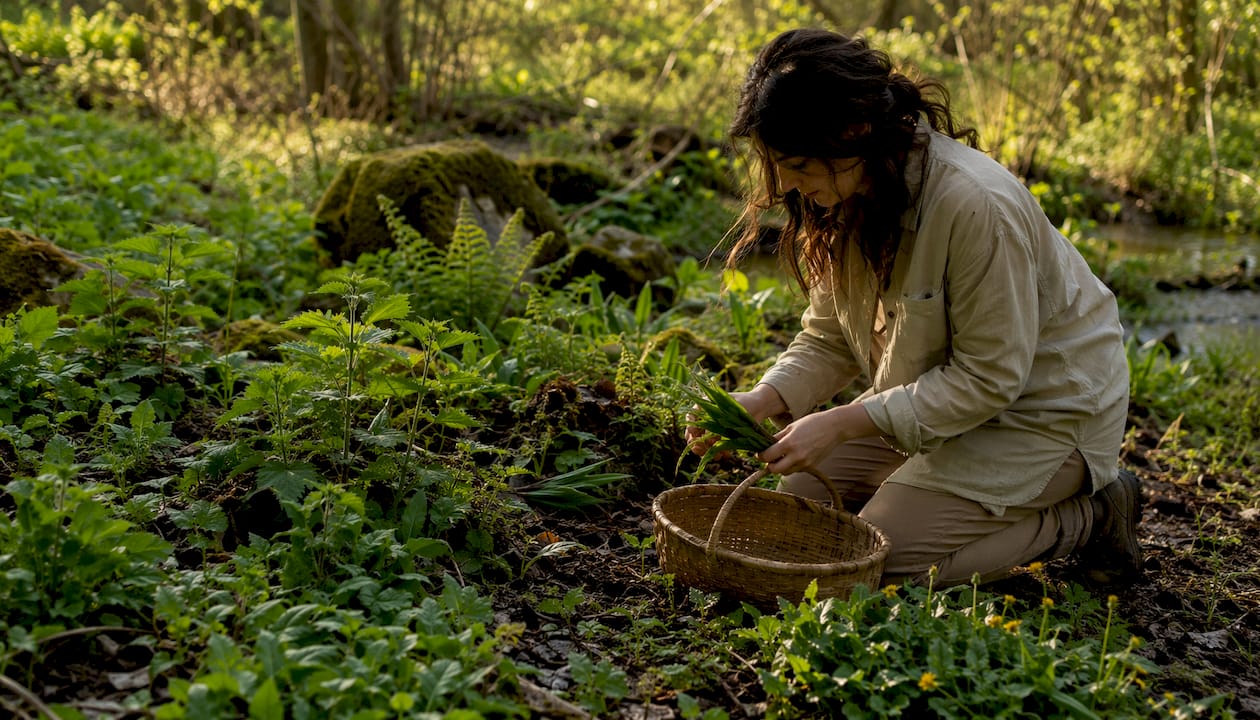
Habitat notes: Woodland edges tend to be the most productive single habitat in the eastern U.S. Wetlands offer cattail, watercress, and arrowhead. Meadows and disturbed ground are where dandelion, plantain, and purslane thrive. Roadsides can look productive but carry real contamination risk from vehicle exhaust and pesticide drift — treat them as off-limits unless you know the land’s history.
Regionally, the temperate Northeast offers a long spring window for greens and morels. The Midwest has exceptional nut and berry seasons. The Pacific Coast extends the green season well into winter in milder zones.
Ethical foraging: how to harvest without causing harm
Sustainable foraging is not just good ethics — it protects the patches you want to return to next year.
Do:
Take no more than one-third of any plant population in a given spot.
Use scissors or a knife for haircut-style harvesting of tender shoots and leaves; it encourages regrowth.
Rotate your harvest sites so no single patch gets depleted.
Harvest invasive species (garlic mustard, Japanese knotweed, kudzu) more liberally — removing them benefits native ecosystems.
Replant root fragments or scatter seeds when digging tubers.
Don’t:
Harvest rare, threatened, or protected species under any circumstances.
Trample surrounding vegetation to reach a target plant.
Dig up entire root systems unless the species is abundant and you have land permission.
Ignore cultural significance: many plants hold meaning for Indigenous communities, and that deserves respect.
Wildlife depends on the same berries, nuts, and seeds you are eyeing. Leaving enough behind is not just courtesy — it keeps the local food web intact.
How to clean, process, and prepare wild foods safely
Most wild greens need nothing more than a thorough rinse and a quick cook. A few require specific treatment to be safe.
Basic processing steps
Wash thoroughly in cold water, changing the water two or three times to remove grit, insects, and surface residue.
Inspect each piece and discard any damaged, discolored, or insect-damaged portions.
Blanch tender greens (30–60 seconds in boiling water, then into ice water) to reduce bitterness and soften texture.
Boil when required — some plants need full cooking to neutralize compounds. Pokeweed leaves, for example, must be boiled in at least three changes of water before they are safe to eat.
Leach acorns by soaking shelled, ground acorn meal in cold water for several hours (changing the water repeatedly) until the bitter tannins are gone. Then dry and use as flour.
Store cleaned wild greens like any fresh vegetable: refrigerate and use within two to three days.
Simple sautéed dandelion greens
Ingredients: 2 cups young dandelion leaves, 2 cloves garlic, olive oil, salt, lemon juice.
Wash leaves well and pat dry.
Heat olive oil in a pan over medium heat, add sliced garlic, cook 1 minute.
Add dandelion leaves, toss to coat, cook 3–4 minutes until wilted.
Finish with a squeeze of lemon and a pinch of salt.
Safety reminder: The first time you eat any new wild food, eat a small portion and wait 24 hours before eating more. Individual sensitivities vary even with correctly identified, widely eaten species.
Best field guides, apps, and local resources for U.S. foragers
Every serious forager needs a short stack of reliable references. Here is what actually matters:
Peterson Field Guide to Edible Wild Plants (Eastern/Central or Western edition): The gold standard for U.S. plant ID. Organized by flower color with detailed illustrations.
USDA PLANTS Database (plants.usda.gov): Free, authoritative range maps and botanical descriptions for every U.S. plant species.
iNaturalist (inaturalist.org): Photograph a find, submit it, and get community verification from botanists and experienced foragers. Use it to supplement, not replace, printed guides.
Local Cooperative Extension services: Every U.S. state has one. They publish free, region-specific guides on edible plants, contamination risks, and safe harvesting. MSU Extension’s Forgotten Foods publication is a strong example.
North American Mycological Association (NAMA) and regional chapters: For mushroom learning, there is no substitute for guided walks with NAMA-affiliated experts.
EdibleWildFood.com and WildEdible.com: Practical online references with photos and preparation notes for common North American species.
For readers building broader outdoor skills, Thrillofit’s guide on identifying poisonous plants pairs directly with this material.
Legal access, protected species, and contamination risks
Before you harvest anything, run through this checklist.
Legal considerations:
Private land: Always get explicit permission from the landowner. Trespassing to forage is illegal regardless of what you are picking.
National parks: Foraging is generally prohibited or strictly limited. Check the specific park’s regulations before visiting.
State parks and public lands: Rules vary by state and land type. Some allow personal-use harvesting; others prohibit it. Contact the land manager directly.
Protected species: Federal and state endangered species lists include some plants. Harvesting them carries serious penalties.
Permits: Some public lands require a permit for any plant collection, even for personal use.
Contamination risks:
Avoid roadsides, highway medians, and areas within 50 feet of heavily trafficked roads.
Skip fields adjacent to agricultural land unless you know their spray history.
Stay away from industrial sites, old landfills, and areas with visible soil discoloration.
Certain plants (notably some ferns and leafy greens) are known to accumulate heavy metals from contaminated soil.
Extension guidance specifically flags pesticide drift from neighboring properties as an underappreciated risk.
When in doubt about land status or contamination history, contact your local Cooperative Extension office or the relevant land management agency before harvesting.
This article is general educational information, not legal or medical advice. Confirm current regulations with the relevant land manager or a qualified professional for your specific situation.
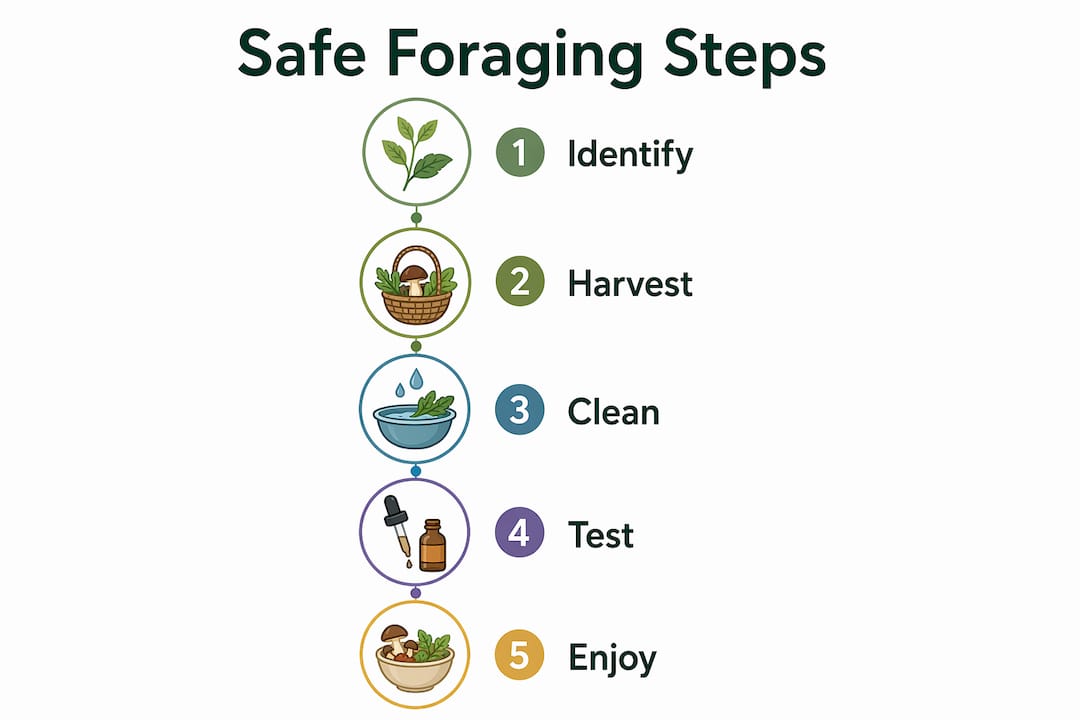
How to build safe foraging skills step by step
Skill-building in foraging is not complicated, but shortcuts get people hurt. Here is a realistic learning path.
Pick 10 beginner species and learn them cold. Dandelion, chickweed, plantain, purslane, blackberry, clover, violet, stinging nettle, wild garlic, and cattail are a solid starting 10. Practice ID and low-impact harvesting with these before adding anything else.
Attend a guided forage. Local mycological societies, Cooperative Extension offices, and community colleges regularly run guided walks. One afternoon with an expert is worth weeks of solo study.
Take a class. Many community colleges and nature centers offer foraging courses. Guided instruction from a region-specific mentor is the fastest safe path to competence.
Photograph and log every find. Date, location, habitat, and multiple angles. This builds your personal reference library and gives you material for expert verification.
Cross-reference every ID with at least two printed sources before eating anything new.
Join a local group. Cooperative Extension, regional mycological societies, and foraging clubs provide ongoing mentorship and community accountability.
Pro Tip: Thrillofit’s guide on wilderness self-reliance covers the broader mindset behind building field skills, including how to approach learning incrementally without taking dangerous shortcuts.
Key Takeaways
Safe foraging requires positive identification from multiple sources, knowledge of edible parts and growth stages, and awareness of contamination and legal constraints before you harvest anything.
Point | Details |
Positive ID is non-negotiable | Never eat a wild plant or mushroom unless you can confirm every identifying feature with multiple sources. |
Start with 10 beginner species | Dandelion, chickweed, plantain, purslane, blackberry, clover, violet, nettle, wild garlic, and cattail are the safest starting list. |
Processing matters | Some species (pokeweed, acorns, nettles) require specific cooking or leaching steps before they are safe or palatable. |
Check legal and contamination status | Confirm land access, avoid roadsides and sprayed fields, and check for protected species before harvesting. |
Thrillofit for next steps | Thrillofit’s guides on poisonous plant ID and wilderness self-reliance are practical complements to this article for outdoor-minded learners. |
Why wild food knowledge is worth your time
Most people who start foraging do it for the novelty and end up staying for something harder to name. There is a particular kind of attention that comes from learning to read a landscape for food — noticing which plants grow at the edge of a trail, what the soil type says about what might be nearby, how a woodland changes between March and October. That attention is genuinely useful, not just as a survival skill but as a way of being more present outdoors.
The conventional framing of foraging as either a hipster hobby or a doomsday prep skill misses what it actually is: a body of practical knowledge that humans carried for most of their existence and are now actively recovering. The cultural and food-security dimensions are real. So is the personal payoff of knowing that a walk in the woods is also, quietly, a walk through a pantry.
The safety-first approach this guide takes is not excessive caution. It reflects the actual stakes. One misidentified plant can cause serious harm. But the answer to that risk is not avoidance — it is learning properly, with good references, good mentors, and the patience to build skill before confidence.
Thrillofit has more to help you forage and explore safely
Foraging fits naturally into the broader outdoor skill set that Thrillofit covers: knowing what grows around you, understanding which plants to avoid, and being prepared when you are far from a grocery store. The site’s guides on identifying poisonous plants and extra food on the trail are direct companions to this article, covering the toxic lookalikes and nutrition planning that every forager needs.
Whether you are heading out for a day hike or planning a longer wilderness trip, building wild food knowledge adds a real layer of resilience to your outdoor practice. Visit Thrillofit to explore the full library of safety-first outdoor guides, from plant identification to camping food ideas and survival skills. Start with what interests you most, and build from there.
Useful sources for beginner foragers
Peterson Field Guide to Edible Wild Plants (Lee Allen Peterson, Houghton Mifflin): The most widely recommended printed U.S. field guide. Organized by flower color; covers Eastern/Central and Western editions separately.
USDA PLANTS Database: Free, government-maintained database with range maps, botanical descriptions, and images for every U.S. plant species. Authoritative for confirming native range and taxonomy.
MSU Extension — Forgotten Foods: Introduction to Wild Edible Plants: Practical, U.S.-focused guide covering common edibles, safe harvesting, and preparation notes. Free to download.
North American Mycological Association (NAMA): The leading U.S. organization for mushroom education. Find local chapters, guided walks, and forays through their website.
MDPI Foods — Valorization of Wild Edible Plants: Peer-reviewed review of nutritional value and economic potential of wild edible plants. Useful for readers wanting scientific background on nutrient density claims.
Wild Food UK Hedgerow Guide: UK-based but widely referenced for its clear lookalike warnings and multi-feature identification approach. Useful as a safety methodology reference.
iNaturalist: Community-verified species identification platform. Photograph multiple features, submit your observation, and get feedback from botanists and experienced naturalists.
Local Cooperative Extension services: Search “[your state] Cooperative Extension edible plants” for free, region-specific publications. Every U.S. state has one.
Recommended
Very helpful! ✨